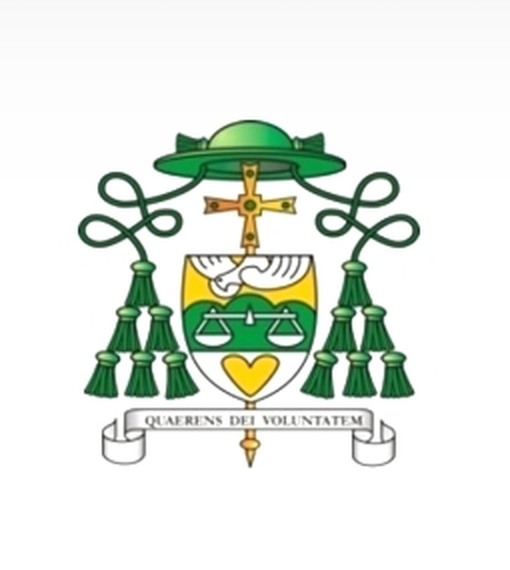
A documentary history of the Church in Enugu: its origins, founding, episcopal leadership, growth and defining milestones.
Verified diocesan history
The Catholic Diocese of Enugu, established in 1962
The Catholic Diocese of Enugu was established on 12 November 1962 by Pope John XXIII through the apostolic constitution Quod divinus. The new ecclesiastical jurisdiction was carved from the Archdiocese of Onitsha and comprised the Awgu, Udi and Nsukka areas, with the church of the Holy Spirit designated as the diocesan cathedral. The establishment of the Diocese marked an important stage in the development of the Catholic Church in eastern Nigeria, giving the communities of this growing region their own bishop and diocesan administration. Since its erection, five bishops have governed Enugu in succession, providing pastoral leadership through the years of the Civil War, diocesan expansion, and the establishment of new diocesan institutions.
The historical succession below records the five diocesan bishops who have governed Enugu. It is distinct from the present composition of the episcopate, which also includes an auxiliary bishop and a bishop emeritus. Their responsibilities and offices differ within the canonical structure of the Church.
1963–1967
1. Most Rev. John of the Cross Anyogu
First Bishop of Enugu.
1970–1977
2. Most Rev. Godfrey Mary Paul Okoye, CSSp
Second Bishop of Enugu.
1978–1996
3. Most Rev. Michael Ugwu Eneja
Third Bishop of Enugu.
1997–2009
4. Most Rev. Anthony Okonkwo Gbuji
Fourth Bishop of Enugu; now Bishop Emeritus.
2009–present
5. Most Rev. Callistus Valentine Chukwuma Onaga
Fifth Bishop of Enugu, appointed 9 February 2009 and installed 2 May 2009.
Catholic life in Enugu developed over decades through the dedication of missionaries, clergy, religious congregations and lay communities. Early mission stations became centres of worship and education, while parishes, schools and formation houses helped Catholic communities to grow throughout the region. The establishment of the Diocese in 1962 provided a permanent local ecclesiastical structure. Its subsequent history reflects episcopal succession, the challenges of the Nigerian Civil War, the growth of Catholic institutions and the creation of the neighbouring dioceses of Nsukka and Awgu. The chronology below places these milestones within the wider history of the Church in southeastern Nigeria.
The mission at Eke
The Catholic Secretariat of Nigeria traces the beginning of organised Catholic evangelisation in the area to Eke, which became an important centre for the spread of the faith into neighbouring communities.
St. Patrick's mission at Coal Camp, Enugu, was raised to the status of a parish, reflecting the growth of the Catholic community around the emerging commercial and administrative city.
By the apostolic constitution Quod divinus, Pope John XXIII established the Diocese of Enugu from the Awgu, Udi and Nsukka areas of the Archdiocese of Onitsha and designated Holy Ghost Church as its cathedral. Most Rev. John of the Cross Anyogu became the first bishop.
Following the death of Bishop Anyogu in July 1967, the Diocese endured the upheaval of the Nigerian Civil War. Its ecclesiastical administration continued until the succession of Bishop Godfrey Mary Paul Okoye in 1970.
After the death of Bishop Godfrey Mary Paul Okoye in March 1977, Most Rev. Michael Ugwu Eneja was appointed Bishop of Enugu in November 1977 and installed in February 1978.
The Diocese of Nsukka was formed from the northern territory of Enugu, an important stage in the growth and reorganisation of the Catholic Church in the region.
Most Rev. Callistus Valentine Chukwuma Onaga was appointed Bishop of Enugu on 9 February 2009 and received episcopal ordination and installation on 2 May 2009.
Catholic education has long been central to evangelisation and social development in Enugu. Seminaries prepared generations of candidates for the priesthood, while secondary schools and institutions founded by religious congregations extended opportunities for intellectual, moral and spiritual formation. The institutions presented here include diocesan seminaries, schools associated with the Diocese, congregational foundations and major seminaries serving the wider Onitsha Ecclesiastical Province. Together, they illustrate how education and religious formation became enduring parts of the Catholic heritage of the region.
Bigard Memorial Seminary, Enugu
Its history began in 1922 as St. Paul's Seminary, Onitsha, through Bishop Joseph Shanahan's initiative. It formally opened in 1924 and settled permanently in Enugu in 1951. Its growth helped shape priestly formation across southeastern Nigeria.
Spiritan International School of Theology, Attakwu
Established by the Spiritans as an international centre of theological education and missionary formation. The school developed from an initiative of Spiritan major superiors in West Africa.
Inaugurated as a regional theological seminary for the Onitsha Ecclesiastical Province with an initial class of 91 theology students. It is a provincial institution serving the formation of candidates from several dioceses, including Enugu.
Established in 2004 at Nchatancha, Nike, St. Bernard Hostel Seminary is part of the Diocese’s formation institutions, providing a home for seminarians in their training.
Queen of Apostles Seminary at Imezi-Owa serves the spiritual-year formation of seminarians. A diocesan homily archive documents activity at the seminary in March 1993.
Established in 1942, CIC is one of Enugu's historic Catholic secondary schools. Its alumni have continued to support educational development and campus improvements.
Opened in 1935, Holy Rosary College became a landmark institution in Catholic girls’ education in Enugu. Its early history was shaped by the Missionary Sisters of the Holy Rosary and its work in the training of young women.
St. Paul’s College, Eke, is a Catholic secondary school serving families within and beyond the Eke community in the Diocese of Enugu. The college remains part of the Catholic educational tradition of the Udi area.
Founded in Enugu by Bishop Godfrey Mary Paul Okoye, the Daughters of Divine Love grew into a congregation dedicated to service in the Church. Sixteen sisters made their first religious profession on 4 November 1973, and the congregation attained pontifical-right status in 1991.
The governance of the Diocese is entrusted to the diocesan bishop, who exercises pastoral responsibility for the people, parishes, clergy and institutions of the local Church. He is assisted in episcopal ministry by an auxiliary bishop, while a bishop emeritus is a former diocesan bishop who has retired from the office of diocesan governance. These distinctions reflect the Church’s canonical organisation and help explain the different responsibilities associated with each episcopal title.
✝
Diocesan Bishop
Most Rev. Callistus Valentine Chukwuma Onaga
Appointed 9 February 2009 · Consecrated and installed 2 May 2009
✝
Auxiliary Bishop
Most Rev. Ernest Anezichukwu Obodo
Appointed Auxiliary Bishop of Enugu on 25 May 2018; consecrated on 31 August 2018. Apostolic Administrator of Abakaliki since 12 April 2026.
✝
Bishop Emeritus
Most Rev. Anthony Okonkwo Gbuji
Appointed Bishop of Enugu on 8 November 1996; installed on 8 February 1997; retired on 9 February 2009.
The bishops’ biographical dates and mottos are recorded in the Enugu Diocesan Directory 2025, pp. 4–6. The historical succession dates distinguish episcopal appointment from installation. See historical succession records ↗.
Diocesan governance
The diocesan curia and pastoral offices
The diocesan curia supports the bishop in the pastoral governance of the local Church. At the centre of this administration is the Chancery, which coordinates official correspondence, records and the communication of diocesan decisions. Pastoral offices assist the bishop in areas such as catechesis, liturgy, Catholic education, family life, social communications and charitable service. Through the collaboration of priests, religious and lay faithful, diocesan administration helps parishes and institutions pursue their mission. The structures of the curia serve the wider work of evangelisation and pastoral care throughout the Diocese of Enugu.
Read the latest Choice Flame.
News, faith reflections, and announcements from the official diocesan newspaper.